What Does a 1% Card Fee Cost Per Month?
By That Card Machine Guy
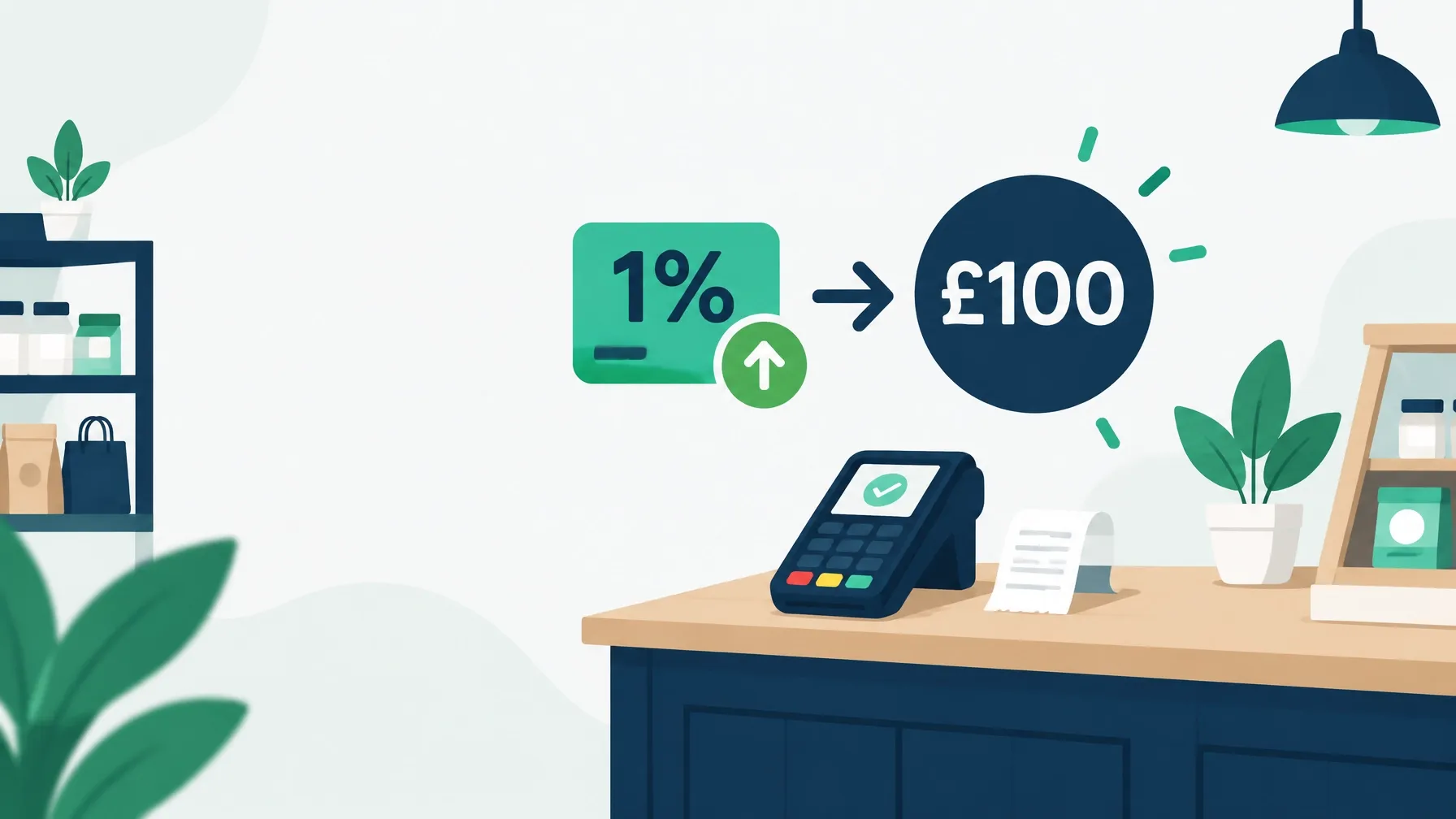
A 1% card fee costs £100 per month on £10,000 of card takings.
The basic calculation is:
Monthly card takings × card fee percentage = percentage-based card cost
So:
£10,000 × 1% = £100 per month
Over a year, that is £1,200.
However, a 1% headline card processing rate is not always the same as your true cost. Monthly PCI fees, terminal rental, transaction charges and other merchant service charges can increase the amount you pay. Your effective card rate is the total cost of accepting cards divided by your card takings.
How much is a 1% card fee on different sales volumes?
The percentage cost changes with your monthly card turnover:
| Monthly card takings | 1% card fee per month | 1% card fee per year |
|---|---|---|
| £2,000 | £20.00 | £240.00 |
| £5,000 | £50.00 | £600.00 |
| £10,000 | £100.00 | £1,200.00 |
| £20,000 | £200.00 | £2,400.00 |
| £50,000 | £500.00 | £6,000.00 |
These figures show only the percentage fee. They do not include fixed costs or charges applied to each transaction.
That distinction matters for small businesses. A provider may advertise a 1% rate, but your monthly bill can be higher once every card-related charge is included.
Worked example: calculating your effective card rate
Imagine a UK shop takes £10,000 in card payments during one month.
Its costs are:
- Percentage card fee at 1%: £100.00
- Transaction charges: £10.00
- PCI fee: £15.00
- Card terminal rental: £25.00
The total monthly card processing cost is:
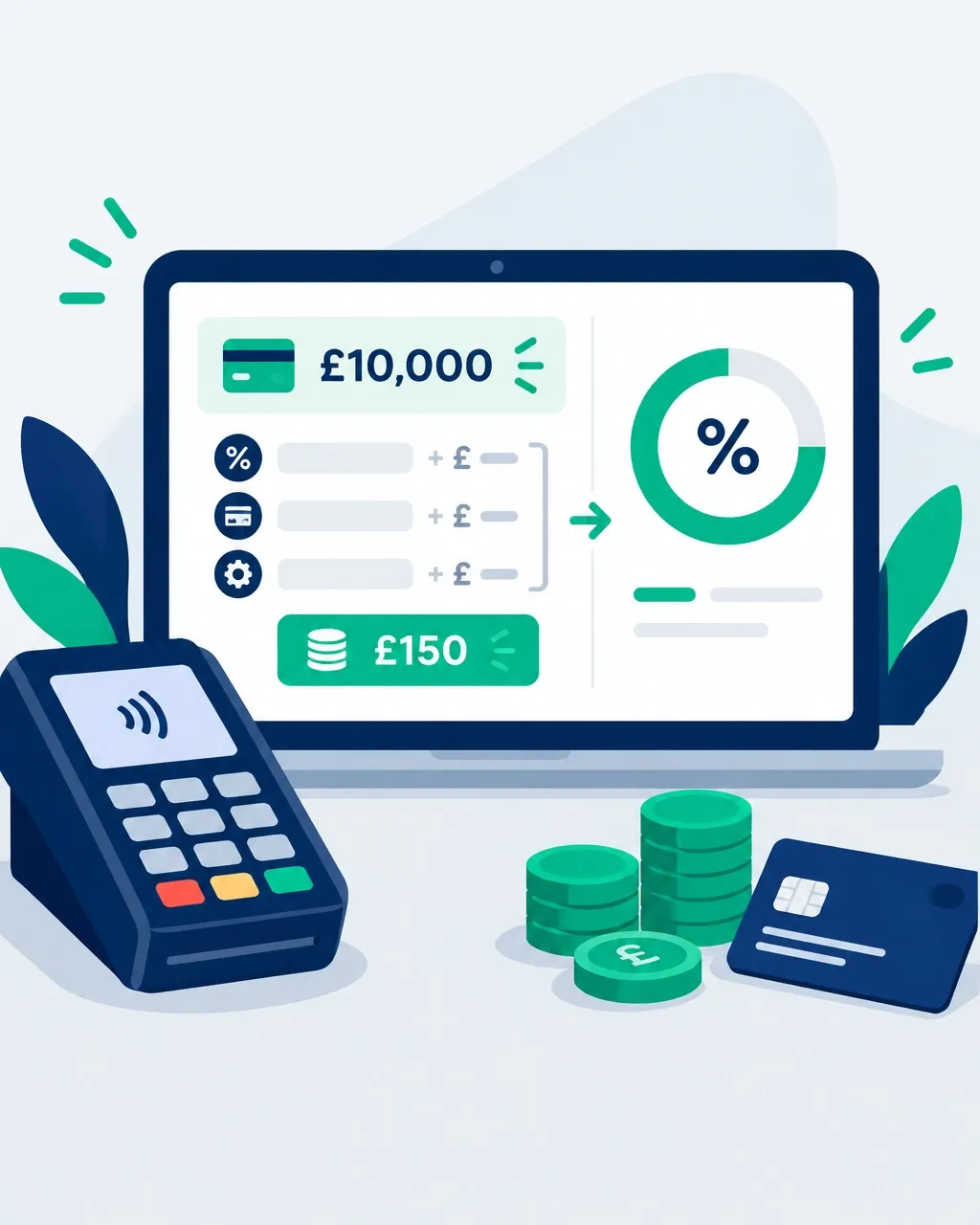
£100.00 + £10.00 + £15.00 + £25.00 = £150.00
Now calculate the effective rate:
£150 in total monthly card costs ÷ £10,000 in card takings × 100 = 1.5%
The business is therefore paying an effective card rate of 1.5%, not 1%.
The total annual cost would be approximately £1,800, assuming the monthly sales and fees stayed the same.
What if there are only PCI and terminal fees?
Using the key example:
- 1% of £10,000: £100
- PCI fee: £15
- Terminal rental: £25
Total monthly cost:
£100 + £15 + £25 = £140
Effective rate:
£140 ÷ £10,000 × 100 = 1.4%
So a 1% headline rate becomes about 1.4% in practice, before adding any per-transaction charges.
What are card processing fees in the UK?
Card processing fees are the costs your business pays to accept debit, credit and commercial card payments. They can be shown as one blended charge or split into several different line items.
Common charges include:
Percentage transaction fees
This is the rate applied to the value of each card payment. For example, a 1% charge on a £50 card payment is 50p.
The percentage may vary depending on:
- Whether the card is debit, credit or commercial
- Whether the payment is made in person or online
- Whether the card is from the UK or overseas
- Your payment provider's pricing model
- Your business type and transaction volume
Fixed transaction charges
Some pricing structures add a fixed amount to every card payment, such as a number of pence per transaction.
These charges can have a noticeable effect on small businesses with low average transaction values. For example, a 20p charge is a much larger proportion of a £5 sale than a £100 sale.
PCI fees
A PCI fee may appear as a monthly or annual charge connected with payment card security and compliance administration.
Check whether the fee is charged every month, once a year, or only in certain circumstances. If it is an annual charge, divide it by 12 when estimating a monthly effective rate.
Terminal or card machine rental
Terminal rental is a fixed cost for using a card machine. It is separate from the charges applied to each card payment.
This is one of the main chip and PIN machine costs to check when comparing card payment plans. A lower transaction rate may come with a monthly rental charge, while a pay-as-you-go card reader may have no rental but a different transaction rate.
Other monthly charges
Depending on your agreement, your merchant service charges UK businesses see may also include:
- Account or service fees
- Statement fees
- Gateway fees for online payments
- Minimum monthly charges
- Software or till integration fees
- Connectivity or SIM charges
- Additional terminal costs
- Refund or chargeback fees
Not every charge will apply to every business. The important point is to use your own statement and contract rather than relying only on an advertised business card processing rate.
Where can you find these costs on a merchant statement?
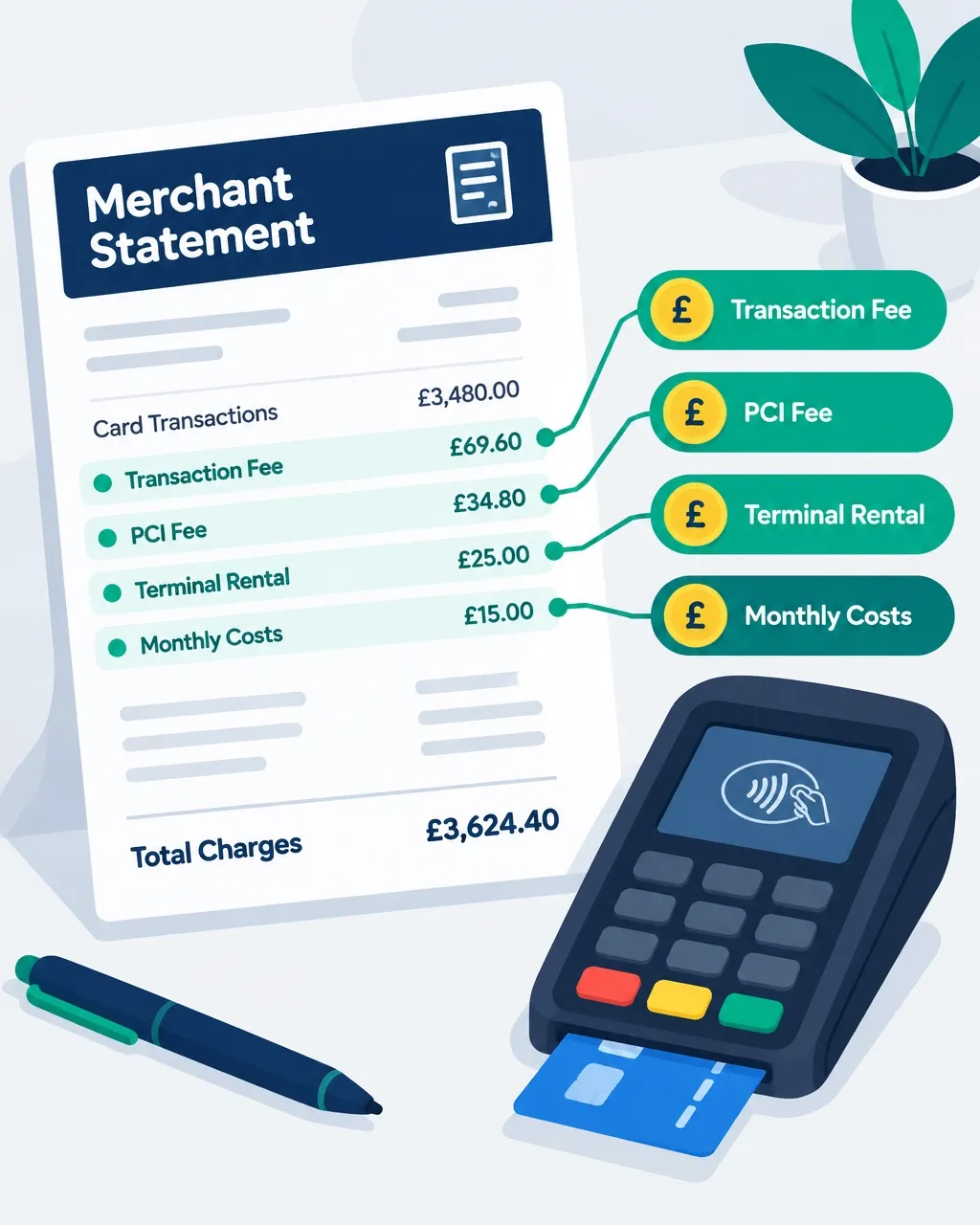
Your merchant statement may use different names for similar charges. Look for the following sections or descriptions:
- Card sales, settled sales or gross processing volume: the total value of card transactions
- Transaction count: the number of card payments processed
- Merchant service charge, discount rate or processing fee: often the percentage-based cost
- Per-transaction or authorisation charges: fixed fees applied to individual payments
- PCI DSS or compliance fee: a recurring security-related charge
- Terminal, equipment or device rental: the cost of hiring the card machine
- Statement, account or service fee: a fixed monthly charge
- Gateway or online payment fee: a cost for card-not-present payments
- Minimum monthly service charge: a minimum amount payable if your transaction fees are below a set level
Some statements combine several costs into one total. Others separate card types, transaction methods and fee categories.
If your statement is difficult to follow, start by recording three numbers:
- Your total card takings for the period
- Your total number of card transactions
- Every card-related fee charged during the same period
Then check whether the statement includes VAT. Your comparison should use a consistent basis: either all figures including VAT or all figures excluding VAT, depending on how you want to assess the cost.
Common mistakes when calculating card reader fees
Using total business turnover
Your effective card rate should normally use card takings, not your total business revenue.
If your business takes £15,000 in total but only £10,000 by card, use £10,000 as the denominator. Cash, bank transfers and other payment methods do not create card processing fees.
Looking only at the headline rate
A 1% rate may not include:
- Fixed pence-per-transaction charges
- Terminal rental
- PCI fees
- Monthly account fees
- Online or keyed-entry charges
- Commercial or premium card costs
Always compare the total monthly cost, not just the percentage shown in a quote.
Forgetting fixed fees during quiet months
A £40 monthly charge has a small effect when you take £20,000 by card. The same £40 has a much larger effect when you take only £2,000.
This is particularly important for seasonal businesses or businesses with irregular card sales.
Mixing different time periods
Do not compare one month's card takings with another month's fees. Use figures from the same statement period. For a clearer estimate, review two or three recent statements and consider seasonal changes.
Assuming every card costs the same
Debit, credit and commercial cards may have different costs. Online, keyed and card-on-file payments may also be priced differently from in-person chip and PIN transactions.
A blended effective rate can be more useful than looking at just one transaction type.
Calculate your own effective card rate
You can use the free CardFeeCheck card processing fee calculator to estimate what accepting cards costs your business.
Enter your card turnover and fees to see your estimated monthly and annual cost. For a more detailed estimate, you can include:
- Debit, credit and commercial card mix
- Percentage processing rates
- Per-transaction charges
- Terminal rental
- PCI fees
- Other monthly costs
You can also enter another provider's rates and compare the estimated monthly and annual cost using the same sales figures. This helps you compare like for like rather than comparing one provider's headline rate with another provider's total bill.
For another way to check your numbers, use the CardFeeCheck effective rate calculator.
CardFeeCheck is free and independent. It does not recommend a payment provider, and you do not need to upload a merchant statement. Calculations take place in your browser. Results are estimates based on the figures you enter, so check the final rates and terms in your agreement.
Related guides for small businesses
Once you know what a 1% card fee could cost, these guides can help you investigate further:
- How to Calculate Your Effective Card Processing Rate, turn your total monthly fees into one comparable percentage.
- Card Machine Rental vs Transaction Fees, understand how fixed chip and PIN machine costs compare with transaction charges.
- How to Read a Merchant Statement, learn what common processing fee categories mean and where they may appear.
- Why a Low Headline Rate Can Still Mean a High Bill, see how extra charges can make a low headline rate more expensive.
- Back to all Card Fee Guides
A 1% card fee is easy to calculate, but it is only the starting point. On £10,000 of monthly card takings, the percentage cost is £100. Your real cost may be closer to £140, £150 or more once all card-related charges are included. Calculating your effective rate gives you a clearer view of what accepting card payments is actually costing your business.
The person behind the calculator
About the author
Written by That Card Machine Guy. I run CardFeeCheck and also help UK businesses with card machines and processing costs. The calculator is free, independent and provider-neutral.