
Card Machine Rental vs Transaction Fees
By That Card Machine Guy
Is card machine rental cheaper than higher transaction fees?
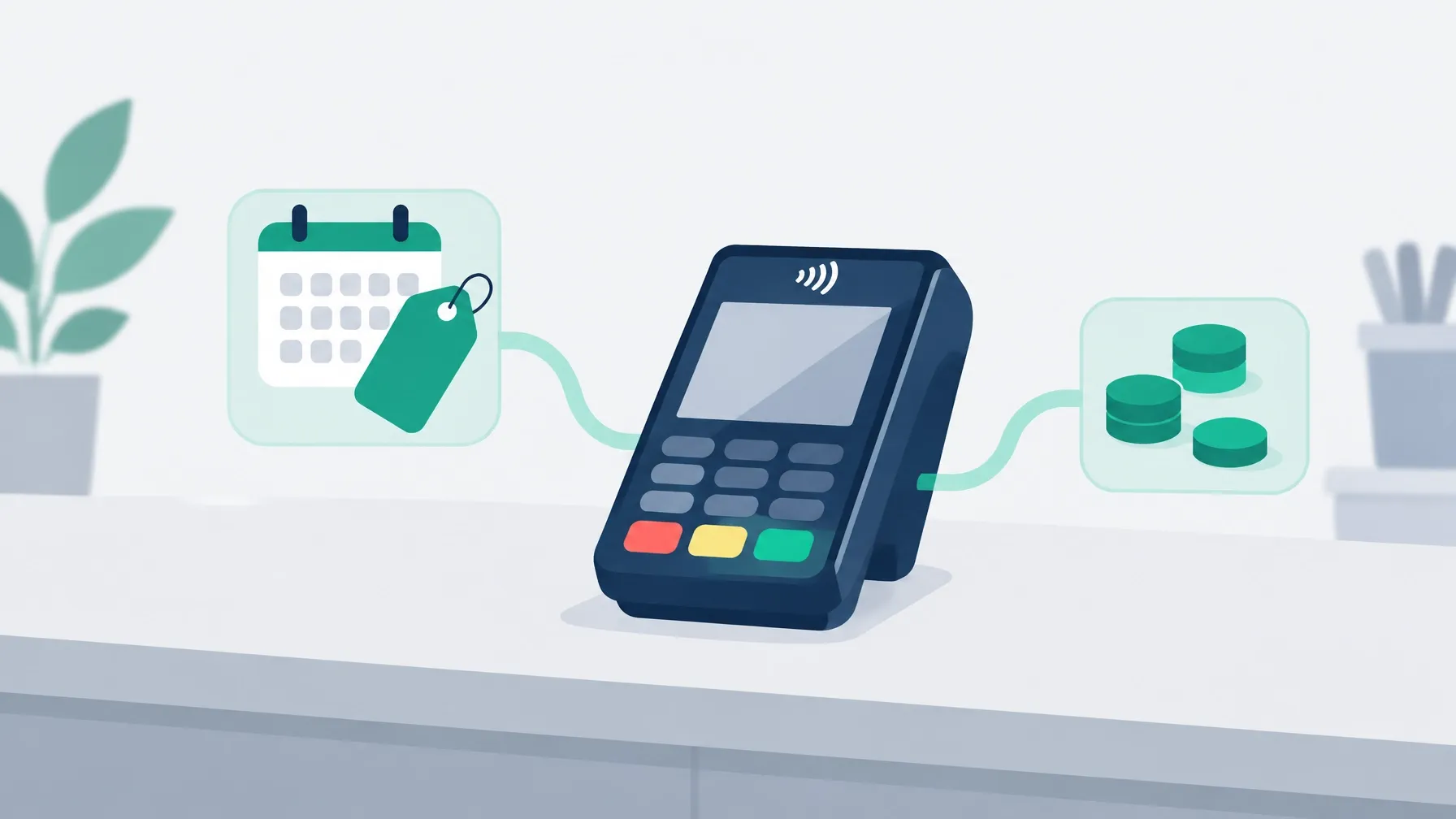
It depends on your monthly card turnover, transaction count and the full list of fees. A rented card machine usually adds a fixed monthly cost of around £18–£30, but may come with a lower transaction rate. A small business card reader with no rental can be simpler, but its higher percentage fee may cost more as your card sales grow.
The right comparison is not rental versus transaction fees in isolation. It is the total monthly cost of accepting cards, including transaction charges, per-transaction fees, terminal rental, PCI fees and other merchant service charges.
All figures in this guide are estimates. Your actual costs depend on your agreement, card mix, transaction values and billing terms.
Card processing fees UK: what are you really comparing?
There are two common pricing approaches:
A rented chip and PIN machine
With a rented terminal, you may pay:
- £18–£30 per month for the terminal
- A percentage transaction rate, such as 1.3%
- A fixed charge on every transaction, such as 10p
- Possible PCI, minimum monthly, account or connectivity fees
The rental charge pays for use of the hardware. It may also cover servicing, replacement or connectivity, depending on the agreement. You do not normally own the machine.
A small business card reader with no rental
A card reader may have:
- No monthly terminal rental
- A higher flat transaction rate, such as 1.8%
- An upfront purchase cost
- Possible fees for refunds, payouts or optional software
This can be attractive if your card turnover is low or changes significantly from month to month. However, a higher percentage fee becomes more expensive as your card sales increase.
The advertised rate is only one part of the calculation. To compare business card processing rates fairly, use the same card turnover and transaction count for both options.
Worked example: £18 rental plus 1.3% and 10p per transaction
Suppose a business takes £5,000 in card payments each month across 200 transactions.
The rented terminal charges:
- Terminal rental: £18
- Percentage fee: 1.3% × £5,000 = £65
- Transaction charges: 200 × 10p = £20
The total monthly cost is:
£18 + £65 + £20 = £103
The effective rate is:
£103 ÷ £5,000 × 100 = 2.06%
Now compare that with a card reader charging a flat 1.8% with no rental:
1.8% × £5,000 = £90
In this example, the no-rental option costs £90 per month, compared with £103 for the rented terminal. The no-rental option is £13 cheaper, even though its percentage rate is higher.
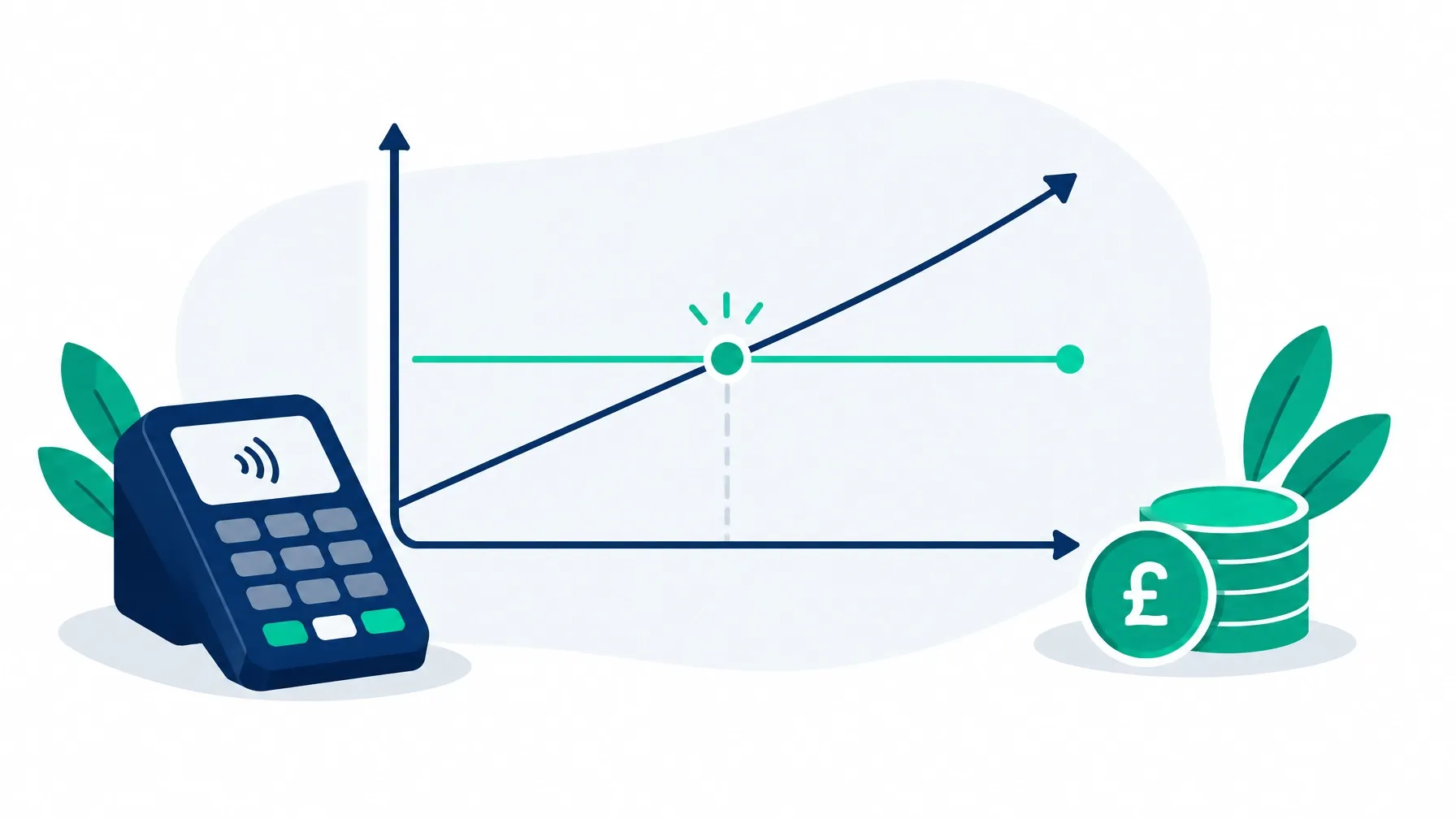
Where is the break-even turnover?
Using the same 200 transactions, set the two costs equal:
£18 + (1.3% × turnover) + £20 = 1.8% × turnover
The fixed costs total £38:
£38 + 1.3% × turnover = 1.8% × turnover
The difference between the rates is 0.5%:
£38 ÷ 0.5% = £7,600
So, if you made exactly 200 transactions, the break-even turnover would be £7,600 per month.
- Below £7,600, the 1.8% no-rental option is cheaper.
- Above £7,600, the rented terminal is cheaper.
At £10,000 in turnover and still 200 transactions:
- Rented terminal: £18 + £130 + £20 = £168
- No-rental reader: 1.8% × £10,000 = £180
The rented terminal now saves £12 per month.
Why transaction count changes the answer
The 10p transaction charge matters more when you take many small payments.
For example, imagine your average card payment is £25. At £10,000 of monthly turnover, you would process around 400 transactions:
- Rental: £18
- Percentage fee: 1.3% × £10,000 = £130
- Transaction charges: 400 × 10p = £40
- Total: £188
The no-rental option would cost:
1.8% × £10,000 = £180
In this case, the no-rental reader is still £8 cheaper.
With an average transaction of £25, the rented option costs approximately:
£18 + 1.3% + 0.4% = £18 + 1.7% of turnover
Compared with a 1.8% flat rate, the difference is only 0.1%. The break-even point becomes:
£18 ÷ 0.1% = £18,000 per month
This shows why a business with low average transaction values may need much higher turnover before rental becomes worthwhile.
A simple effective card rate example
Your effective card rate should include all relevant costs for the same billing period.
Suppose your monthly merchant bill contains:
- Transaction charges: £120
- Terminal rental: £18
- PCI fee: £6
- Other monthly charges: £6
Total card costs are:
£120 + £18 + £6 + £6 = £150
If your card turnover for that month was £10,000:
£150 in total monthly card costs ÷ £10,000 in card takings × 100 = 1.5%
That 1.5% is a more useful figure than looking only at a quoted debit card rate. It shows what accepting all your card payments actually cost.
What fees should you include?
When comparing a rented terminal with a small card reader, include every cost connected with accepting card payments.
Percentage transaction fees
These are usually shown as a percentage of the transaction value. Your statement may separate rates for:
- Debit cards
- Credit cards
- Commercial cards
- Premium or international cards
- Card-present payments
- Online, telephone or manually entered payments
Your card mix matters. A quote based on debit cards may not represent the cost of a month that includes more credit or commercial cards.
Per-transaction charges
A charge such as 10p per transaction can have a noticeable effect on businesses with small average payments.
For example:
- 100 transactions at 10p = £10
- 500 transactions at 10p = £50
- 1,000 transactions at 10p = £100
Do not estimate this fee from turnover alone. You need the number of transactions as well.
Terminal rental and chip and PIN machine costs
Look for line items such as:
- Terminal rental
- POS service fee
- Card machine rental
- PDQ rental
- Countertop terminal
- Mobile or portable terminal
A terminal supplied by a third party may appear on a separate invoice rather than on the merchant processing statement. Check both documents before deciding that there is no rental charge.
PCI and other fixed charges
Also check for:
- PCI compliance or security fees
- Minimum monthly service charges
- Merchant account fees
- Gateway fees
- SIM or data charges
- Reporting or statement fees
- Payout or batch fees
- Refund charges
- Chargeback fees
A minimum monthly charge can be particularly important for seasonal businesses. Even if your percentage fees are low, a fixed minimum may apply when your card turnover falls.
How to find these costs on a merchant statement
Merchant statements commonly split costs into several sections. The exact names vary, but you may see:
- Card payments summary — this may show card turnover, transaction counts and total charges.
- Monthly charges — look here for terminal rental, POS service fees, minimum billing charges, PCI fees and account charges.
- Transaction charges — this section may list rates and totals by card type, along with fixed authorisation or transaction charges.
- Activity-based charges — these can include chargebacks, retrievals, manual authorisations, non-secure transactions or other exceptional activity.
Some statements show terminal rental without VAT, while other charges may be presented on a different VAT basis. Use a consistent VAT-inclusive or VAT-exclusive basis when comparing options.

Common mistakes when comparing card machine costs
Comparing a headline rate with a total bill
A 1.3% rate is not necessarily your total cost. Rental, per-transaction charges and fixed fees can increase the effective rate.
Forgetting the 10p charge
A percentage rate may look competitive until you multiply the fixed transaction charge by hundreds of payments.
Double-counting terminal rental
If you start with the total amount on your merchant bill, terminal rental may already be included. Do not add it again unless you are working from a rate-only quote.
Using the wrong transaction count
The number of transactions affects your total pence charges. Use a typical month or compare several months if your sales vary.
Comparing different periods
Match the card turnover and fees to the same month or billing period. A quarterly statement should not be compared with one month of card sales without adjusting the figures.
Ignoring card mix
Debit, credit and commercial cards can have different rates. A rate for one card category may not reflect your overall cost.
Leaving out seasonal months
A rented terminal may look good during busy periods but expensive during quieter months. Consider your average turnover across the year, not only your best month.
Work out your own effective card rate
Use the free, independent CardFeeCheck card processing fee calculator to estimate your true cost.
You can enter your card turnover and total merchant fees to calculate your effective overall rate. For a more detailed estimate, add:
- Debit, credit and commercial card mix
- Transaction charges
- Terminal rental
- PCI fees
- Other monthly costs
- Transaction count
You can also enter another provider's rates and compare the estimated monthly and annual cost using the same sales figures. This makes it easier to compare a rental terminal with a higher-rate, no-rental card reader.
The calculator does not recommend a payment provider or require you to upload a statement. Calculations take place in your browser, and results are estimates based on the figures you enter.
Related guides
For the next steps in understanding card processing fees, read:
- How to Calculate Your Effective Card Processing Rate, use total fees and card turnover to see the rate you are really paying.
- What Does a 1% Card Fee Cost Per Month?, see how a percentage charge translates into pounds and pence at different turnover levels.
- How to Read a Merchant Statement, identify monthly, transaction and activity-based charges.
- Why a Low Headline Rate Can Still Mean a High Bill, see how rental, fixed charges and per-transaction fees can change the final cost.
- Back to all Card Fee Guides
The best option is the one that suits your actual turnover, transaction volume and payment mix. Calculate the complete monthly cost before choosing between a rented card machine and a no-rental reader.
The person behind the calculator
About the author
Written by That Card Machine Guy. I run CardFeeCheck and also help UK businesses with card machines and processing costs. The calculator is free, independent and provider-neutral.